Wedding Budget Planner & Guest List Guide: How to Avoid Hidden Costs (+ Free Spreadsheet)
Published November 3, 2026 · ⏱️ 4 min read · Printable Resource Guide
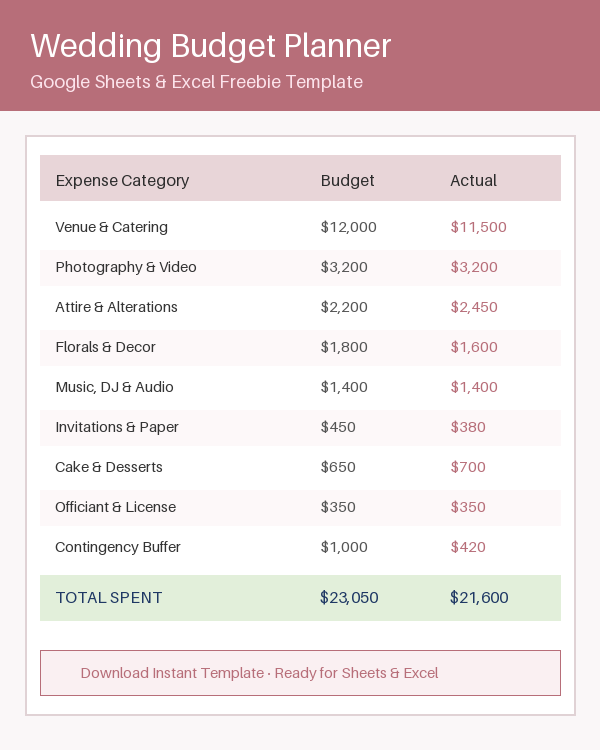
Download free file
Planning a wedding is one of the most exciting milestones of your life, but without a clear system, costs can spiral out of control before you even send out invitations.
Between hidden service charges, creeping guest counts, and staggered vendor deposits, nearly 50% of couples end up exceeding their initial budget by 15% to 30%. The key to staying in control isn't skimping on what you love—it is knowing exactly where every dollar is allocated from day one.
Here is an actionable guide to building your wedding budget, managing guest RSVPs without stress, and tracking vendor milestones, complete with a free downloadable spreadsheet template.
1. The Real Allocation of a Wedding Budget
Before booking venues or trying on attire, establish a realistic percentage breakdown based on current industry averages:
- 45–50% Venue, Food & Beverages: Your largest single expense. Covers room hire, dinner service, bar packages, rentals (chairs, linens, tableware), and mandatory gratuity.
- 12–15% Photography & Videography: High-quality visual memories that outlast the wedding day itself.
- 10–12% Attire & Beauty: Dress, suit, veil, shoes, alterations, hair styling, and makeup trials.
- 8–10% Florals & Atmosphere: Ceremony arch, bridal party bouquets, boutonnieres, and table centerpieces.
- 8–10% Music & Entertainment: Ceremony sound equipment, cocktail hour acoustic music, and evening reception DJ or live band.
- 3–5% Stationery & Signage: Save the dates, invitations, wax seals, postage, welcome boards, and place cards.
- 5–8% Emergency Contingency Fund: A non-negotiable buffer for unexpected weather tents, last-minute tailor adjustments, or surprise delivery fees.
Try estimating your target numbers right now with our free wedding budget calculator below:
2. Beware of Sneaky "Hidden" Wedding Costs
When asking vendors for quotes, always request the full bottom-line figure including taxes and fees. Common surprise line items include:
- Service Charges vs. Gratuities: Venues often charge an automatic 18–22% "service fee" that goes to overhead, not directly to waitstaff tips.
- Alterations & Undergarments: Wedding gowns rarely fit straight off the rack; professional tailoring often adds \$300 to \$800 to the dress price.
- Invitation Weight & Postage: Heavier paper stock, multiple inserts, and wax seals require extra postage stamps that quickly add up for 100+ households.
- Vendor Meals: Most contracts require providing hot meals for your photographer, videographer, DJ, and day-of coordinator during the reception.
Our Wedding Budget Tracker for Google Sheets & Excel breaks down expenses into 12 detailed categories with automated percentage gauges and budget variance warnings so surprises never catch you off guard.
3. Mastering the Guest List & RSVP Logistics
Your guest count is the single biggest multiplier of your overall wedding cost. Each additional person represents extra meals, bar drinks, chair rentals, and wedding favors.
To keep RSVPs orderly:
- Group by Household: Collect physical addresses and email addresses in a unified sheet 8 to 10 months prior.
- Track Dietary Needs Early: Identify vegan, gluten-free, or allergy requirements in the RSVP column to hand off directly to your caterer.
- Set a Strict RSVP Deadline: Require RSVPs 4 weeks before the big day, giving you 7 full days to follow up with non-responders before the final venue headcount lock.
Our Wedding Guest List & RSVP Tracker includes automated charts for headcount confirmed vs. declined, plus table assignment columns and dietary summary cards.
4. Vendor Milestones & Due Dates
Most wedding pros require an initial deposit (typically 20% to 50%) upon signing, with the remainder split into scheduled progress payments or due the week of the wedding.
Juggling 8 to 12 vendor contracts across separate email threads creates severe anxiety about missed deadlines. Keep a central registry of: - Primary contact person, phone number, and emergency day-of backup - Contract total amount and deposit paid - Remaining balance and strict due date - Gratuity notes and payment method (Venmo, bank transfer, check)
Our Wedding Vendor & Payment Tracker gives you a clear timeline of upcoming dues so your wedding week stays entirely stress-free.
More to explore
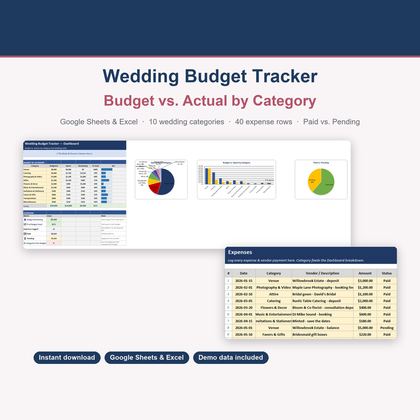
Wedding Budget Tracker — Google Sheets & Excel
Budget vs. actual across 10 wedding categories with 40 vendor expense rows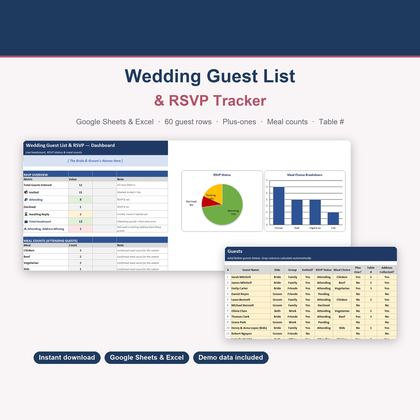
Wedding Guest List & RSVP Tracker — Google Sheets & Excel
Track 60 guests, plus-ones, RSVP status, caterer meal counts and table seating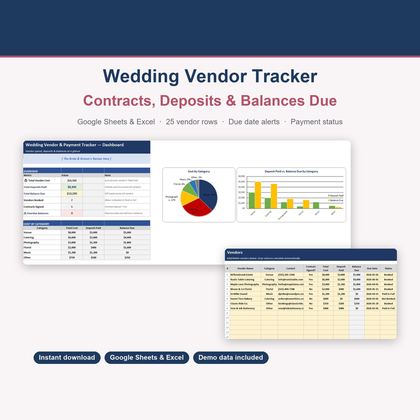
Wedding Vendor & Payment Tracker — Google Sheets & Excel
Track 25 wedding vendors, contracts signed, deposits paid, balances due and due datesFAQ
Can I use these wedding spreadsheets in Google Sheets as well as Microsoft Excel?
Yes! All DeskLark wedding templates are native `.xlsx` files that open seamlessly in Microsoft Excel and convert with 1-click into Google Sheets without breaking formulas or conditional formatting.
Is this template suitable for small intimate micro-weddings?
Absolutely. The template rows are fully customizable. You can adjust categories, rename rows, or delete unneeded lines for intimate backyard ceremonies or 250-guest ballroom galas alike.
How do I share the spreadsheet with my partner or wedding planner?
Simply upload the file to Google Drive, open with Google Sheets, and click the "Share" button to give edit access to your fiancé, maid of honor, or wedding coordinator.